7 minutes, 5 seconds
-32 Views 0 Comments 0 Likes 0 Reviews
At first glance, flower delivery in Islamabad sounds like a service built on speed and convenience. But that’s only the surface.
Behind every order is something more personal—a moment that needs to reach another person. A birthday remembered late at night. A quiet apology that feels easier to express through petals. A celebration you cannot attend but still want to be part of.
In a calm and structured city like Islamabad, flower delivery is less about movement and more about meaning.
Before a bouquet ever leaves a shop, it goes through a process most people never see.
Flowers arrive fresh but unarranged, almost like raw material. They are sorted not just by appearance but by behavior—some are delicate, some are bold, some hold structure better during travel.
Then begins the quiet work: trimming, balancing, and composing. Each stem is placed with intention so the arrangement can survive movement without losing its identity.
What arrives at the destination is the result of careful anticipation, not chance.
Many services promise fast delivery. But speed alone doesn’t create emotional impact.
Timing does.
A bouquet that arrives too early can feel disconnected from the moment it was meant for. One that arrives too late can lose its emotional weight. But one that arrives exactly when it should feels almost effortless—like it was meant to be there at that exact second.
That precision is what makes flower delivery meaningful. It turns scheduling into emotion.
Flowers have a language of their own. They don’t need translation.
Color, shape, and structure already communicate something before a message card is even read. Soft tones feel gentle. Bright combinations feel celebratory. Deep shades feel emotional or reflective.
Delivery adds another layer to that language. It turns expression into presence.
Instead of just saying something, flowers arrive as something.
A bouquet meant for delivery is not designed the same way as one meant for display.
It has to survive motion, temperature shifts, and handling—while still looking intentional at the end of the journey.
That requires a different kind of thinking:
Structure must hold during travel
Fragile flowers must be protected
Composition must remain visually balanced
Wrapping must support without hiding beauty
This is where floristry becomes engineering as much as art.
One of the most powerful parts of flower delivery is the moment it is received.
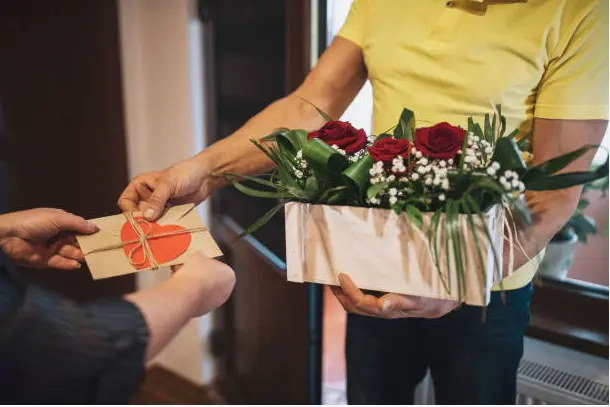
A doorbell rings. A package is handed over. For a brief second, there is curiosity. Then recognition. Then emotion.
That transition—from unknown to understood—is where the impact lives.
Unlike digital messages, flowers create physical presence instantly. They don’t wait to be opened on a screen—they exist immediately in real space.
Modern life is fast, fragmented, and often distant. People are physically present less often than they want to be.
Flower delivery fills that gap.
It allows intention to travel when presence is impossible. It keeps relationships active across time and distance. It turns absence into something visible instead of something empty.
That is why it continues to matter even in a digital world.
Reliable flower delivery is not just about transport. It is about coordination.
From the moment an order is placed, multiple steps must align:
Selection of fresh flowers
Design of a stable arrangement
Secure packaging for travel
Timed dispatch planning
Careful handling during transport
Final presentation upon arrival
If even one step is careless, the experience weakens. When all steps align, the result feels seamless.
Today, customers don’t just want flowers—they want involvement.
They choose colors, moods, styles, and sometimes even the emotional tone of the bouquet. They want the arrangement to reflect a specific feeling, not just a category.
This shift has turned flower delivery into a collaborative process between customer and florist.
Instead of “sending a bouquet,” it has become “creating a message.”
In a world full of notifications and messages, physical gifts carry different weight.
A delivered bouquet cannot be ignored. It sits in a room, changes the atmosphere, and lingers in memory.
It becomes part of the space, not just part of the moment.
That physical permanence is what makes flower delivery emotionally stronger than many other forms of communication.
Flower delivery in Islamabad is not just a service—it is a system of emotional movement.
It connects people across space without reducing meaning. It transforms intention into something visible. It turns timing, design, and care into a shared experience.
And in the end, what arrives at the door is never just flowers.
It is presence, carefully packed and quietly delivered exactly when it matters most.



