
Notifications

Site Tour with Test Users
Choose a test user to login and take a site tour.
Choose a test user to login and take a site tour.


14 minutes, 55 seconds
-25 Views 0 Comments 0 Likes 0 Reviews
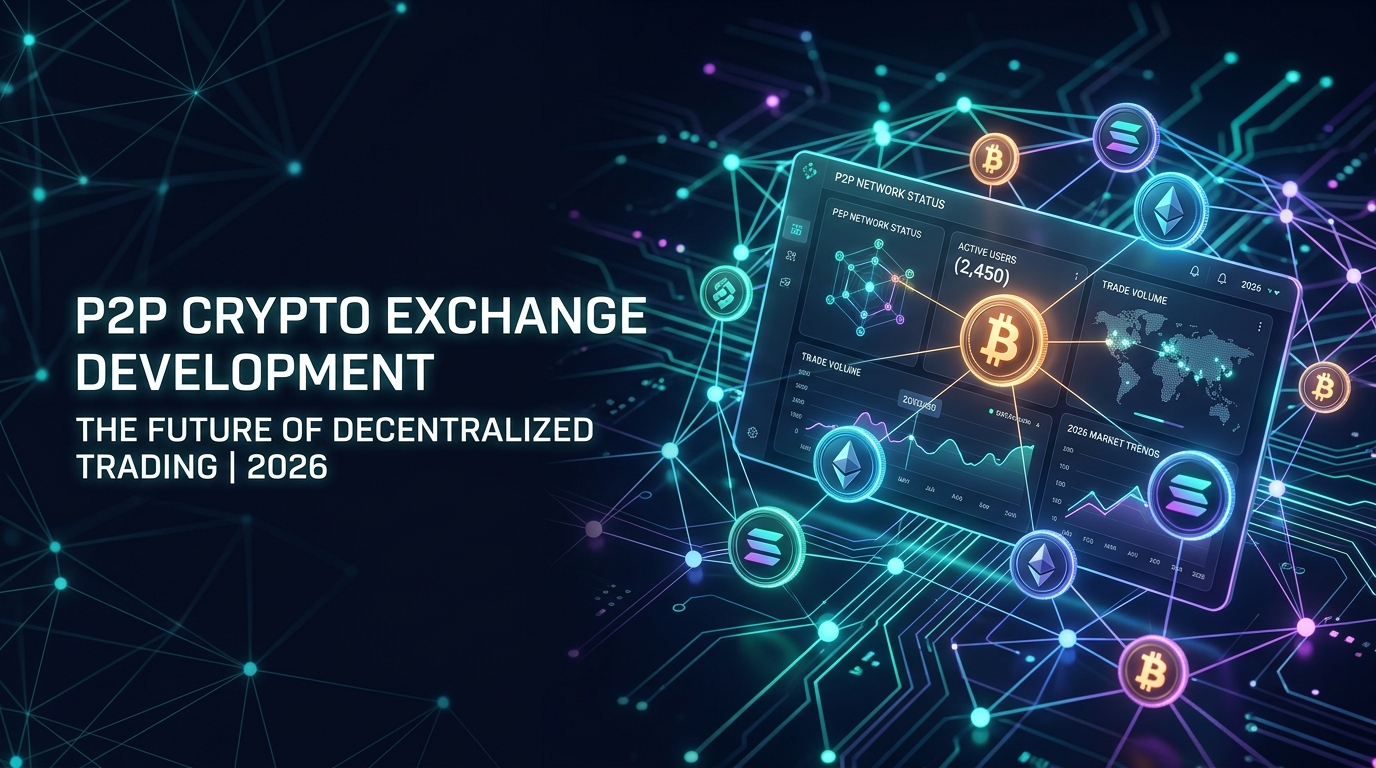
The cryptocurrency industry continues to expand as businesses and investors increasingly adopt decentralized financial systems and blockchain-powered trading platforms. Among the many business opportunities in the crypto sector, peer-to-peer crypto exchanges have gained strong market demand because they allow users to trade digital assets directly without relying entirely on centralized intermediaries. A P2P exchange platform creates a secure environment where buyers and sellers can negotiate transactions, choose preferred payment methods, and complete cryptocurrency trades with greater flexibility and transparency. The growing popularity of decentralized finance, international crypto payments, and blockchain-based investments has significantly increased the need for advanced trading platforms that provide security, scalability, and seamless user experiences. Businesses entering the digital asset market are actively investing in reliable P2P exchange Development Services to build secure and feature-rich trading ecosystems that support long-term growth. From escrow protection and multi-currency wallet integration to AI-powered fraud monitoring and regulatory compliance systems, modern P2P exchanges require a strategic combination of technology, security, and operational planning. Understanding the features, development process, and cost structure of a peer-to-peer crypto exchange is essential for businesses planning to establish a strong position in the competitive cryptocurrency industry in 2026.
A P2P crypto exchange is a decentralized trading platform that allows users to buy and sell cryptocurrencies directly with one another. Unlike centralized exchanges, these platforms do not fully control user assets during transactions. Instead, they facilitate secure trading through escrow systems, smart contracts, and transaction verification mechanisms. The platform acts as a mediator that ensures transparency and security while giving traders greater control over their funds and trading conditions.
Peer-to-peer exchanges have become highly popular because they support flexible payment methods and localized trading experiences. Users can select payment options based on regional accessibility, including bank transfers, digital wallets, online payment gateways, and mobile payment applications. This flexibility increases platform adoption across international markets and helps businesses attract a wider trading audience.
Escrow protection is one of the most important components of a P2P exchange platform. During a trade, the seller’s cryptocurrency is temporarily locked within the escrow system until the buyer completes the payment process successfully. Once payment confirmation is verified, the digital assets are automatically released to the buyer.
This process reduces fraudulent activity and improves trust between users. Advanced P2P exchange Development Services integrate automated escrow systems powered by smart contracts to strengthen transaction security and improve operational reliability.
The increasing use of cryptocurrencies for payments, remittances, decentralized finance applications, and digital investments has accelerated the demand for peer-to-peer trading platforms. Businesses are now focusing on building scalable exchanges that support secure transactions, high-speed trade execution, and multi-chain compatibility.
Modern exchanges are also integrating mobile-first trading experiences, AI-powered fraud monitoring systems, and advanced compliance tools to meet changing market expectations and regulatory requirements.
A successful P2P exchange platform requires advanced features that improve security, user experience, transaction efficiency, and operational scalability. Businesses investing in P2P exchange Development Services must focus on creating a secure and user-friendly ecosystem capable of handling growing trading volumes and evolving user expectations.
Secure user onboarding is essential for preventing fraud and ensuring regulatory compliance. Most exchanges implement Know Your Customer (KYC) and Anti-Money Laundering (AML) verification systems to validate user identities and monitor suspicious activities.
Additional security measures such as two-factor authentication, biometric login support, and encrypted communication channels further improve account security and reduce unauthorized access attempts.
Integrated wallet systems allow users to store, transfer, and manage multiple cryptocurrencies within the exchange platform. Supporting various blockchain networks helps businesses attract a larger trading audience and improve transaction flexibility.
Many exchanges combine hot wallets and cold storage systems to maintain both accessibility and asset protection. This approach minimizes the risk of cyberattacks while ensuring smooth transaction processing for active traders.
The trading engine is responsible for matching buy and sell orders efficiently. A high-speed trading engine ensures accurate order execution, low transaction latency, and stable platform performance during periods of heavy trading activity.
Cloud-based infrastructure and scalable server architecture help exchanges maintain operational efficiency while supporting thousands of concurrent users without compromising system performance.
Dispute management systems are essential for resolving conflicts between buyers and sellers during transactions. A transparent dispute resolution process helps support teams review payment records, transaction history, and communication logs efficiently.
AI-assisted moderation tools and automated ticket management systems can further improve response times and reduce operational workload for customer support teams.
Developing a P2P crypto exchange involves multiple technical and strategic stages that ensure long-term functionality, scalability, and market competitiveness. Businesses partnering with professional P2P exchange Development Services providers can streamline the development process and reduce operational risks.
The first stage involves identifying target audiences, competitor strategies, supported cryptocurrencies, and preferred payment methods. Businesses must also analyze regional crypto regulations and compliance requirements before launching the platform.
A clear business model helps define revenue streams such as transaction fees, escrow charges, premium memberships, and token listing fees.
User-friendly interface design is essential for improving user engagement and platform accessibility. The exchange should provide smooth navigation, responsive design compatibility, and simplified access to trading functionalities.
Backend infrastructure must support secure database management, high transaction throughput, and scalable server architecture capable of handling increasing trading activity.
Blockchain integration enables secure transaction recording and decentralized asset management within the exchange ecosystem. Smart contracts automate escrow operations, payment verification, and trade execution processes.
Modern exchanges often support multiple blockchain networks such as Ethereum, Binance Smart Chain, Polygon, and Solana to improve trading flexibility and support broader cryptocurrency ecosystems.
Before launch, the platform undergoes extensive testing procedures to identify technical vulnerabilities and operational issues. Functional testing ensures that all features operate correctly, while security testing evaluates wallet protection, API security, and authentication systems.
Load testing is also performed to measure platform performance during high user activity and heavy trading conditions before deployment to live servers.
The total cost of developing a P2P crypto exchange depends on several factors, including platform complexity, security requirements, customization levels, and technology integrations. Businesses investing in P2P exchange Development Services should evaluate both initial development expenses and long-term operational costs.
Frontend design, backend development, and infrastructure setup represent a significant portion of the overall project budget. Fully customized exchanges generally require larger investments due to advanced feature integration and scalability requirements.
White-label solutions offer a more affordable alternative for startups seeking faster market entry with reduced development timelines.
Security infrastructure is one of the most critical investment areas for any crypto exchange platform. Costs may include wallet security systems, encryption technologies, DDoS protection, penetration testing, and fraud monitoring tools.
Compliance expenses also include KYC verification systems, AML monitoring tools, and legal consultation services required for regulatory adherence.
Post-launch maintenance includes software updates, server monitoring, performance optimization, customer support management, and feature upgrades. As user activity increases, businesses may need additional cloud hosting resources and infrastructure scaling solutions.
Marketing campaigns, liquidity management, and customer acquisition strategies also contribute to long-term operational expenses.
A basic P2P exchange with standard trading features may cost between $20,000 and $40,000. Mid-level platforms with advanced wallet integration, escrow management systems, and mobile applications may range between $50,000 and $100,000.
Enterprise-grade exchanges with AI-powered analytics, institutional security systems, and high-frequency trading capabilities can exceed $150,000 depending on project complexity and scalability requirements.
Security plays a major role in the success and credibility of a cryptocurrency trading platform. Since digital asset exchanges frequently face cyber threats and hacking attempts, businesses must prioritize strong security infrastructure during the development process.
Two-factor authentication adds an additional verification layer during login attempts, reducing the risk of unauthorized account access. End-to-end encryption protects sensitive user data, transaction records, and wallet information from external threats.
Secure SSL communication protocols and biometric authentication systems further strengthen platform protection.
Cold storage solutions keep the majority of digital assets offline, significantly reducing exposure to online hacking risks. Hybrid wallet systems combine hot wallets for daily transactions and cold wallets for long-term asset protection.
This approach improves both operational efficiency and overall platform security.
AI-based fraud monitoring systems analyze suspicious activities, abnormal transaction behavior, and unauthorized access attempts in real time. Automated monitoring tools help exchanges prevent money laundering activities and improve compliance management.
Continuous monitoring systems also enhance user trust and strengthen the exchange’s operational reliability.
The future of P2P exchanges will be influenced by blockchain innovation, regulatory developments, and increasing cryptocurrency adoption across global markets.
Artificial intelligence is improving fraud detection, customer support automation, market analytics, and personalized trading experiences. Predictive algorithms help users analyze market movements and optimize trading decisions more effectively.
AI-powered moderation systems are also improving dispute resolution efficiency and reducing support management workload.
Multi-chain interoperability allows users to trade assets across multiple blockchain networks without complex transfer procedures. Cross-chain bridges improve liquidity availability and support broader cryptocurrency ecosystems.
Exchanges supporting multiple blockchain networks are expected to attract larger global trading communities in the coming years.
Governments and financial authorities are implementing clearer regulations for cryptocurrency trading platforms. Compliance-focused exchanges are gaining investor trust due to improved transparency and operational accountability.
Businesses utilizing professional P2P exchange Development Services are focusing on integrating advanced compliance technologies to prepare for future regulatory changes.
P2P crypto exchanges continue to transform the digital trading industry by providing secure, transparent, and decentralized cryptocurrency transaction environments for users worldwide. The growing adoption of blockchain technology, decentralized finance applications, and digital payment systems has significantly increased the demand for advanced peer-to-peer trading platforms in 2026. Businesses planning to launch a crypto exchange must focus on security, scalability, regulatory compliance, and seamless user experiences to remain competitive in the evolving digital asset market. From escrow protection and multi-currency wallet integration to AI-powered fraud monitoring and multi-chain compatibility, modern exchange platforms require a combination of advanced technology and strategic planning. Partnering with experienced P2P exchange Development Services providers enables startups and enterprises to build reliable trading ecosystems capable of supporting long-term operational growth, user trust, and market expansion within the rapidly developing cryptocurrency industry.


